This episode tells the story of the Hackathon held at Agile2025, where, in just three days, a group of professionals achieved something unprecedented: identifying the client’s needs, developing, testing, and delivering a fully functional MVP. The client was a nonprofit social organization, which gave the challenge an even greater sense of purpose.
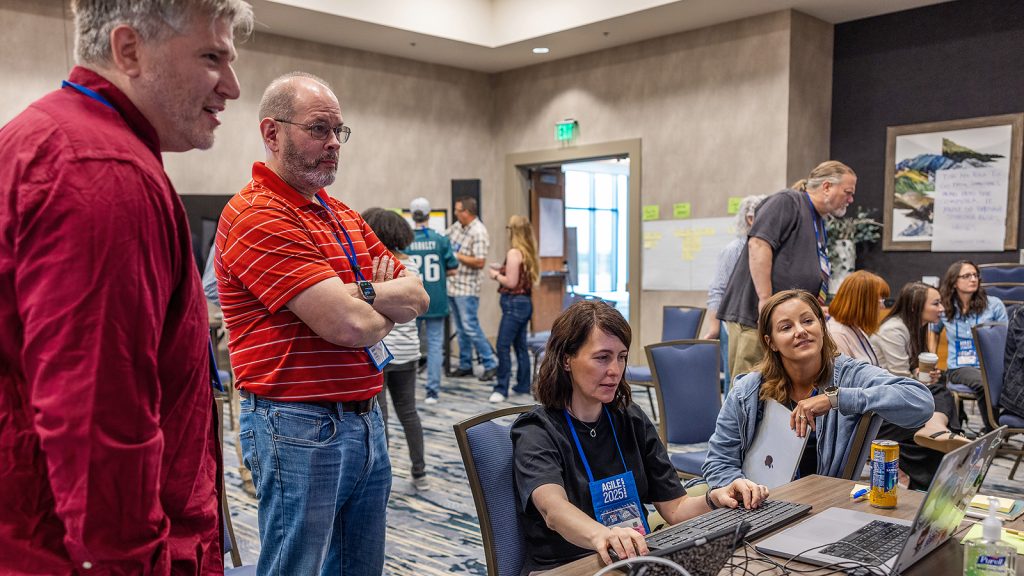
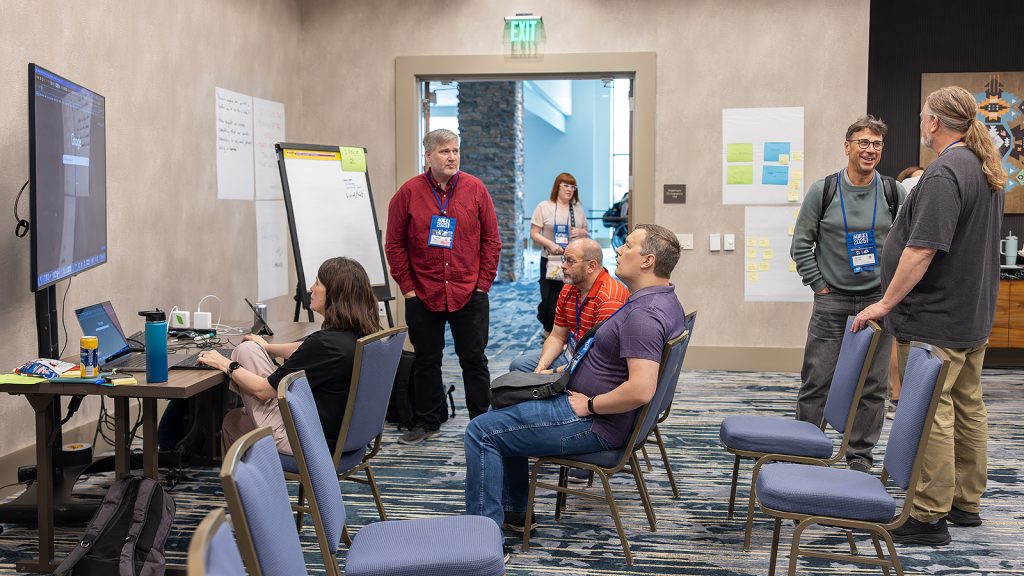
This achievement was historic. Never before had a hackathon organized by the Agile Alliance, which has been running such events for several years, reached this level of delivery.
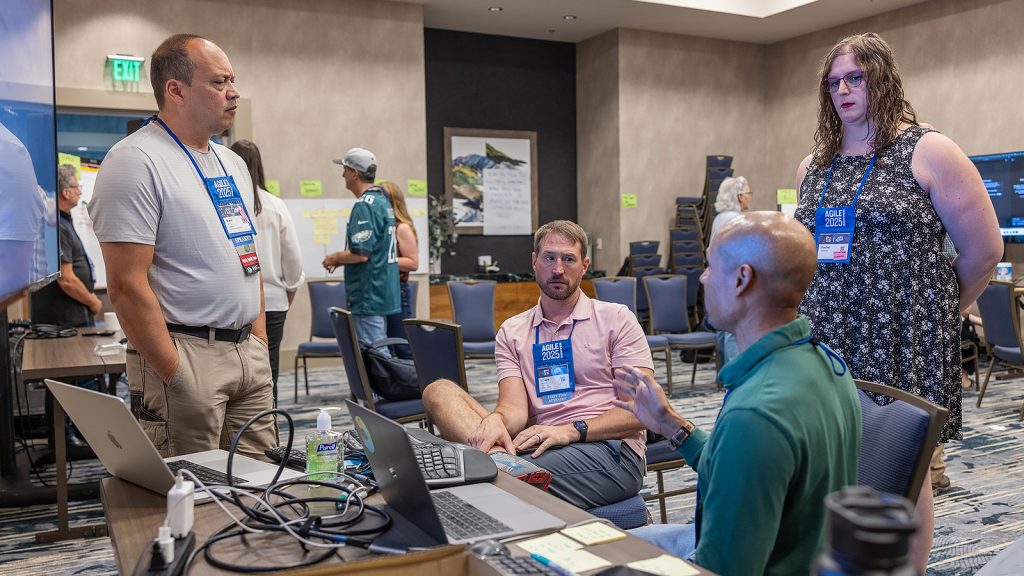
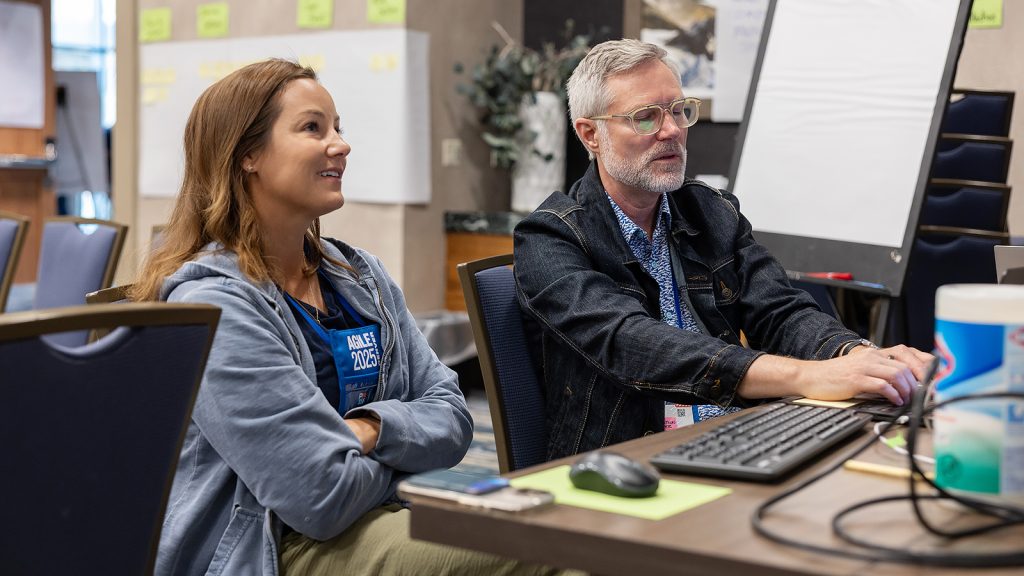
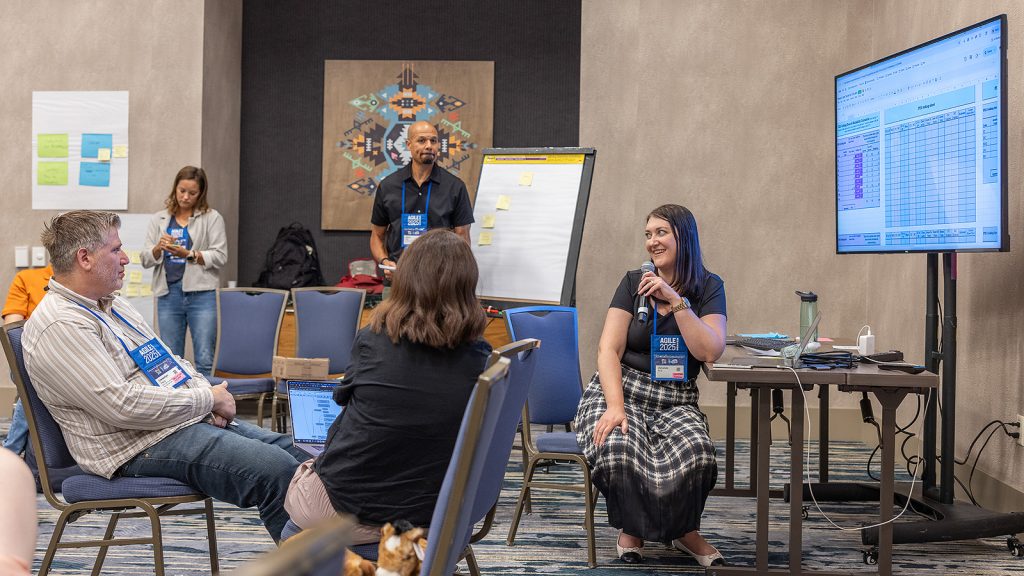
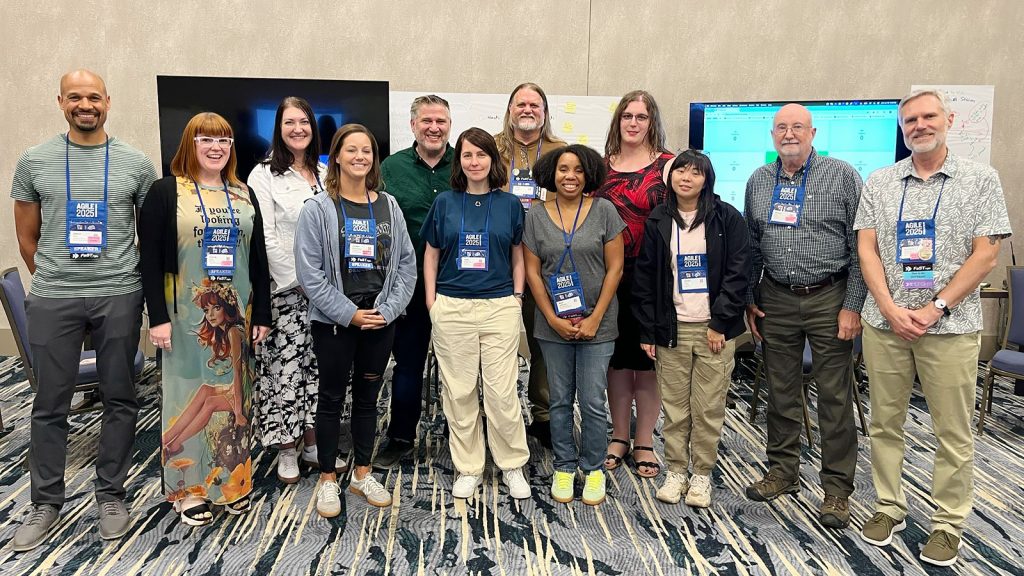
This episode is presented as a “webinarcast,” combining in-depth conversation with participant presentations that explain the work in detail. It is essential listening for anyone involved in digital product delivery, particularly technical teams. The guests provide extensive knowledge sharing, walking through the entire process and surfacing highly relevant insights. Featured speakers include former Agile Alliance chair Brian Button, Llewellyn Falco, and Lada Kesseler from the Hack for Good 2025.
The following is an AI summary of the podcast.
This episode of the Reimagining Agility podcast is a webinar-style conversation and live case study on using agentic AI to deliver real software fast. Host Margareth Carneiro speaks with Llewellyn Falco, Lada Kesseler, and Brian Button about the live onsite Agile2025 hackathon project that replaced a clunky Excel workflow used by clinicians with a simple mobile counter and reporting flow. The goal was to reduce effort, raise accuracy, and get essential usage data to a state agency without storing HIPAA data.
Key Themes and Highlights
Agentic AI beats chat-only usage
Falco argues that serious software work happens with agent tools in the terminal or IDE, not just a browser chatbot. Treat the model as a collaborator who asks clarifying questions, proposes options, and executes in your repo. Speed comes from tight human guidance plus automation, not copy-paste.
Script what must be deterministic
Use AI to write shell scripts, git hooks, and repeatable tasks, then run those scripts yourself. Deterministic steps should not remain inside the model’s probabilistic loop. Example: a script and pre-push hook to bump versions automatically.
Manage complexity with tiny steps and fast feedback
Decompose work into very small, testable changes. Ship constantly. The team did more than fifty deploys in three days. Immediate user feedback surfaced button order, labels, and the need for a visible undo. Early risk exposure beat late pull-request surprises.
Diagram in text to steer the model
Kessler converts screenshots to ASCII and then to structured text, edits the ASCII by hand, and feeds it back to the model as a precise UI spec. This keeps the conversation in text longer, which makes iteration faster and clearer.
Outcome that mattered
The clinician’s accuracy improved from a 75 percent gold standard with spreadsheets to 92 percent on the first use of the mobile counter, without prior training. The tool emailed required usage data to the foundation for state reporting while avoiding storage of protected health information.
Data design before UI polish
The team paused attractive UI work to de-risk data capture and reporting. They replaced yes or no self-report questions with numeric fields that reduce bias and increase analytic value. The resulting metrics finally reached the state after years of zero submissions.
What changes for Agile processes and roles
Fast agentic development compresses idea to demo to feedback into hours. That pushes Scrum teams toward smaller slices, continuous delivery, and real customer contact. Roles like PO and Scrum Master must shorten feedback loops and facilitate direct learning with users. Expect smaller teams doing what used to require larger orgs.
Why “you still own the code”
Button’s caution is blunt. If a system fails at 4 a.m., on-call engineers must understand and fix it. AI can generate Terraform, Lambdas, and pipelines, but teams remain accountable for operability, refactors, and root cause analysis.
Skills to cultivate now
- Decomposition and sequencing
Break work into minimal, verifiable steps that the model can complete safely. - Specification in plain text
Write concise markdown specs, ASCII diagrams, acceptance checks, and to-do lists the model can follow. - Critical review and refactoring
Read the generated code, improve structure, speed up tests, and raise safety before proceeding. - Tooling fluency
Automate versioning, hooks, and local scripts so repeatable tasks are outside the model. - Collaboration habits
Pair and mob programming with AI in the loop. Invite non-coders into the higher-level conversation. - Courage and curiosity
Try, fail, back up, and iterate. The pace is new and can feel risky, but learning compounds fast.
Final Takeaways
- Use agent tools in your IDE or terminal. Treat the model as a partner that asks and answers.
- Write specs in markdown first, then generate code. Keep iteration in text as long as possible.
- Script deterministic steps outside the model. Automate versioning, builds, and hooks.
- Deliver in tiny slices with immediate user feedback to surface risk early.
- Prioritize data integrity and reporting paths before UI shine.
- You still own operability. Read, refactor, and understand the code you ship.
- Build team skills around decomposition, text-based specification, refactoring, and collaborative workflows.