The following is an AI summary of the event.
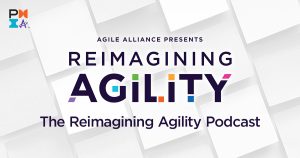
This episode of the Reimagining Agility Podcast centers on the product owner role, product vs project thinking, and how AI changes delivery speed without changing the need for human judgment. Host Margareth Carneiro interviewed Don McGreal and Ralph Jocham on customer value, PO skills, coexistence of product and project management, hybrid traps, and the clickbait claim that Scrum is “dead.” The through line was vision, value, and validation over rituals.
Key Themes and Highlights
Customer value first, business results follow
Invoking Peter Drucker, the panel argues that management exists to create a customer. Build products that solve real problems or make life meaningfully easier. If you do that well, the business metrics follow. Starting with the business before the customer is backwards.
What a strong PO actually does
Good POs do discovery, not order taking. They learn the domain quickly, map stakeholders in four groups (users or customers, influencers, providers or dependencies, governance or regulators), and synthesize pain points into testable hypotheses. Everything is a hypothesis until customers say it helps.
Vision beats backlog paperwork
Teams can write stories and acceptance criteria. The PO must hold a clear product vision, make sequencing decisions, validate directly with users, and say no to protect coherence. The most common failure is a PO who only sorts requests.
Product mindset vs project mindset
Project success is time, budget, scope. Product success is real use, value, and willingness to pay. Both skill sets matter, but measure the right thing for the context. In Scrum environments, do not pair a separate project manager with a Scrum Master as parallel owners. Use project skills to manage internal constraints, and use product skills to maximize external value.
Hybrid without feedback is waterfall in costume
Daily scrums and ceremonies do not make you agile. You are agile when you release and validate frequently. You can release multiple times inside a sprint. One week sprints work, and even faster loops are possible. If leadership wants plans, provide them, then prove progress with real increments and learning.
Leading up while leadership asks for milestones
You can supply plans that are equally inaccurate as classic plans, but pair them with short feedback cycles, rolling budgets, and frequent releases. Trust grows when stakeholders see working product often, not when they see bigger Gantt charts.
AI accelerates delivery, not judgment
AI compresses discovery and writing time, and speeds engineering, which may shift the bottleneck to product decisions. Keep final decisions human. Expect faster prototyping and more releases, but worry about maintenance costs if AI generates lots of opaque code. If AI also maintains it, expect emergent nonhuman abstractions. Either way, the human job is picking valuable problems and validating outcomes.
Scrum is not dead, the hype is tired
Scrum never required releasing only at sprint end, and it never fixed sprint length at two weeks. Use Scrum as a tool to plan short horizons, release daily if you can, and inspect outcomes. If something better helps you validate faster, use it. The target is agility, not brand loyalty.
Burnout and resilience in product
Product is full of dilemmas and errors. Expect tough choices between bad and worse with imperfect data. The antidote is a tight idea test learn loop, telemetry, and regular outcome reviews.
Final Takeaways
- Start with customers, then align business goals to proven value.
- Treat the PO as a product leader who holds vision and validates outcomes, not an order taker.
- Use project skills to manage constraints, and product skills to create value.
- Hybrid only counts if you release and learn frequently. Otherwise it is waterfall with ceremonies.
- Give leadership plans, then de-risk those plans with working increments and real feedback.
- Use AI to speed research, writing, and coding, while keeping humans accountable for choices and ethics.
- Release inside the sprint, review outcomes weekly or faster, and let evidence drive the backlog.
- Optimize for vision, value, and validation. Rituals are optional, learning is not.